
Valetino Roman Styles Black Leather Finish
Valentino vs Mario Valentino: Two Different Companies Sharing a Single Name
Two Italian companies sell handbags under the word Valentino, they are not connected, and the resulting confusion is old enough to have produced its own case law. One of them is the Roman couture house founded in 1960; the second is a leather goods and footwear firm founded in Naples in 1952. Both are legitimate, both hold documented rights to the name in their own way, and the boundary between them was drawn by a private contract in 1979 rather than by a judge. What follows sets out who each company is, what the agreement requires of each side, which ground the recent litigation covered and how it finished, and how a shopper can tell within seconds which company made a given bag. What follows is a trademark story rather than an accusation aimed at either side, and nothing below should be read as a finding of wrongdoing. Take it in once and you will not misread a listing again.
Two houses, two cities, two separate businesses
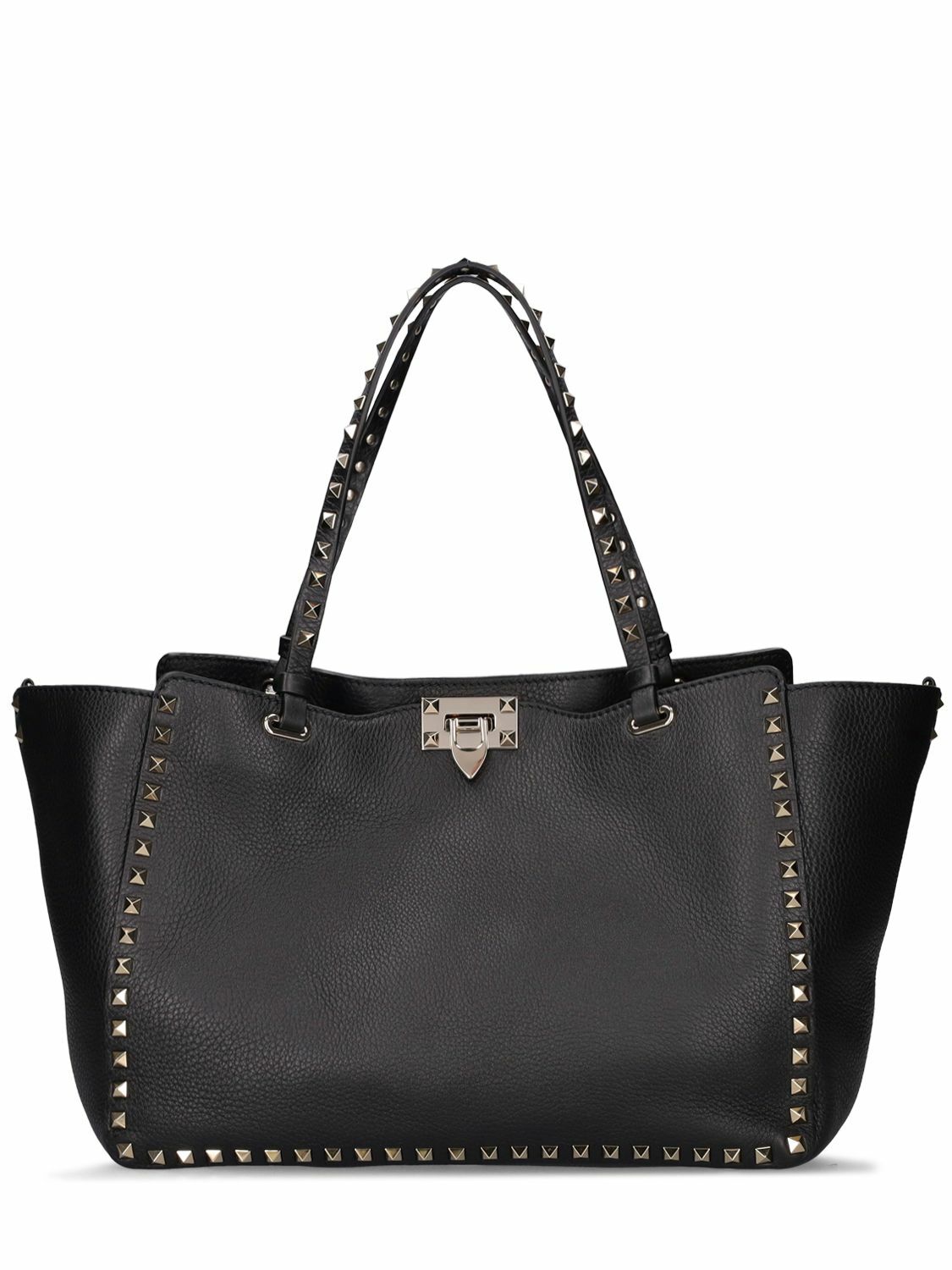
Valentino S.p.A. is the Roman house founded in 1960 by Valentino Garavani and Giancarlo Giammetti, with its first atelier on Via Condotti. Ownership no longer has anything to do with the founder: he sold the business in 1998, Mayhoola for Investments took control in 2012 for around 700 million euros, and in July 2023 Kering acquired thirty per cent, with the stated intention of buying the company outright by 2028. Valentino Garavani himself stepped back from design in 2007, presented his last couture collection in January 2008 and died on 19 January 2026 at the age of 93, meaning nothing in the present bag https://valetino.net/ collection came from his hand. Mario Valentino S.p.A. is a different company, set up in Naples in 1952 by a man of that name and headquartered there ever since, and it is a leather goods and footwear house rather than a couture maison. The company sells as Valentino by Mario Valentino, and its claims to have invented the stiletto heel and the women’s moccasin are self-description rather than verified fact.
The 1979 contract that carved up the name
A coexistence agreement signed in 1979 established which marks each side could apply to which goods, and it is still the document everything else refers back to. It permits Mario Valentino to use Mario Valentino, M. Valentino, Valentino, MV or V on the exterior, provided the full name appears inside the item and on the packaging. That same agreement prevents the company from using V and Valentino together on leather goods. Running in the other direction, Valentino S.p.A. is contractually required to use GARAVANI in addition to VALENTINO on its leather goods and in the advertising for them. There is also a separate United States position: Mario Valentino’s stated position is that it has held the American trademark Valentino for handbags and leather goods since 26 April 1971, a senior-rights point corroborated in legal reporting.
Why one company must write GARAVANI
On a Roman-house bag, the surname on the interior tag is there by contract, not by design preference. Given how the 1979 agreement allocated the marks, and because of the senior US rights position on handbags, Valentino S.p.A. does not present its leather goods under the single word Valentino. Adding GARAVANI is what keeps the mark distinguishable, which is why VALENTINO GARAVANI appears in capitals on the tag and in the advertising for bags. Inside the Roman house the same wording doubles as a naming convention: accessories carry Valentino Garavani, and ready-to-wear falls under Valentino and Maison Valentino. That is one company applying one set of standards, not a lower tier and a higher one. The practical consequence is the most useful fact in the whole subject: a bag from the couture house says GARAVANI, and a bag reading only Valentino outside with Mario Valentino inside is a genuine Mario Valentino, a different company at a different price point.
The 2019 lawsuit, and how it concluded
In July 2019 Valentino S.p.A. sued Mario Valentino in the US District Court for the Central District of California, docketed 2:19-cv-6306. The counterclaims brought by Mario Valentino were dismissed in April 2021. On 14 June 2024 the case itself was settled and dismissed without prejudice, and the terms were never disclosed. The words without prejudice matter here, because either side stays free to bring the matter back. Reporting also suggests that more than ten proceedings, arbitrations among them, remained live in Italy, so the 2024 dismissal ended one American case rather than the whole disagreement. The claims pleaded in the action were:
- Alleged false advertising and unfair competition.
- Breach of the 1979 coexistence agreement.
- Handbags alleged to be lookalikes of the couture house’s designs.
- A claim of unauthorised use of the V mark on leather goods.
The dispute is reported to have escalated from 2017 onward, when handbag advertising began foregrounding the word VALENTINO on its own. Because the case settled, none of it was tested to judgment, and no finding of wrongdoing was entered against either side.
A second case, brought in 2022
A separate action pointed the other way and drew in a third party. In October 2022 Mario Valentino S.p.A. brought a claim against Fashionphile Group LLC in the Southern District of New York, docketed 1:22-cv-08984. The complaint alleged that roughly four hundred handbags had been listed on the resale platform as VALENTINO when they were in fact goods of Valentino S.p.A. The outcome of that case is unverified here and should not be described as resolved in either direction. The naming problem does not stop at the two companies: it extends to resale platforms, marketplace listings and anyone who describes a bag in a single word. For a buyer, the lesson is simple: a listing title is the least reliable part of any resale page.
Where each brand actually turns up
Different channels carry the two companies, which clears up a good deal of the confusion. The Roman house sells through its own webstore and boutiques, plus a defined set of authorised retailers including Neiman Marcus, Bergdorf Goodman, Saks Fifth Avenue, Nordstrom, Mytheresa, Net-a-Porter, Farfetch, Selfridges, Harrods and Tessabit. Its one legitimate off-price channel is THE OUTNET, the off-price arm of Net-a-Porter, though how deep the discounting goes there is not something to state with confidence. It is the Naples company’s bags that appear on the shelves of American off-price chains, which is verifiable from those retailers’ own brand filter pages. That is why a Valentino bag sale at an off-price chain is seldom what a shopper looking for the couture house actually means. Nothing improper is involved on either side: these are two companies selling their own goods through their own distribution. The couture house’s leather goods were observed in 2026 at market prices from about $650 for a VLogo Signature clutch in grainy calfskin to $7,900 for an embroidered Panthea, all made in Italy, while Rebag’s data places the house’s average resale retention near 41 per cent.
| Point of comparison | Valentino S.p.A. | Mario Valentino S.p.A. |
|---|---|---|
| Founding | Rome, 1960 | Naples, in 1952 |
| Bag branding | Valentino Garavani | Valentino by Mario Valentino |
| Interior marking | VALENTINO, GARAVANI, MADE IN ITALY | Mario Valentino inside the item and on the packaging |
| Usual channels | Own boutiques; Saks Fifth Avenue, Neiman Marcus, Mytheresa, Farfetch | Off-price retail: Nordstrom Rack, Saks OFF 5TH, TJ Maxx |
Thirty seconds to tell them apart
Start inside the bag rather than on the exterior. On a couture-house bag the interior tag carries VALENTINO and GARAVANI in capitals along with MADE IN ITALY, stitched down on all four sides, with consistent font weight and evenly pressed stamping. There is usually a serial number on a tag inside an interior pocket, but not always: older pieces may carry none, and its absence on its own proves nothing. Date codes are not part of how these bags are marked, meaning any guide offering to decode a manufacturing date from the digits is describing something that does not exist. If the exterior reads only Valentino and the interior says Mario Valentino, you are holding a genuine Naples-made bag from the other company. That trap cuts both ways: a real Mario Valentino bag will fail a Garavani checklist while being completely authentic, so establish which company made the bag before you ask whether it is genuine.
What this means for shopping
Neither one is a counterfeit here, and framing this as fake against real misses what is happening. Want the Roman house? Search Valentino Garavani rather than Valentino on its own, and read the tag before the price. If the Naples company’s leather goods suit you, buy them knowingly and enjoy the lower price, a price that reflects a different business, not a compromised version of the same one. The harm occurs in resale listings and third-party marketplaces that use one word to describe both, which is precisely the territory the 2022 case covered. A pre-owned Valentino bag described only as Valentino needs clear photographs of the interior tag before any money changes hands. Ask for those photographs and a decades-old tangle collapses into a two-second check.